Choosing the best barn door hardware starts with the way the door needs to move—not with the roller shape or finish. Before ordering, consider the number of doors, available wall space, mounting structure, track length, vertical clearance, and the specifications of the door you plan to use.
This guide explains the main types of barn door hardware and the measurements you should check before selecting a system. When you are ready to compare available kits, visit the Homacer Barn Door Hardware Collection.
Start With Your Sliding Barn Door Configuration
The first question is how many sliding barn door you need and how you want them to move.
A single door sliding beside an opening uses a different track arrangement from two overlapping closet doors. A ceiling-mounted system also has different structural and clearance requirements from hardware installed above the doorway.
Use the following table as a starting point:
| Opening and room layout | Hardware system to consider | Main requirement to check |
| One door with clear wall space beside the opening | Single-door non-bypass | Enough wall space for the door to slide fully open |
| Two doors opening away from the center | Double-door non-bypass | Clear wall space on both sides of the opening |
| Two doors that need to overlap | Single-track or double-track bypass | Door overlap, track length and vertical clearance |
| Three overlapping doors | Triple-track bypass | Wider opening, sufficient overhead clearance and compatible door sizes |
| Limited usable wall area above the opening | Ceiling-mount hardware | Structural ceiling support and joist location |
| Closet with limited side-wall space | Bi-folding hardware | Folding clearance in front of the opening and product-specific sizing |
This table does not replace the specifications on an individual product page. Always confirm the supported door thickness, door weight, mounting method, required clearance and included components before ordering.
Types of Barn Door Hardware

Non-Bypass Barn Door Hardware
With a non-bypass system, the door travels along the track without passing behind or in front of another door.
A single-door non-bypass kit is commonly used when one door can slide completely to one side of the opening. A double-door non-bypass arrangement allows two doors to meet near the center and slide away from each other.
Non-bypass hardware may be suitable when:
- There is enough clear wall space beside the opening.
- The door can travel without hitting switches, outlets, shelving or trim.
- You want the opening to be more fully exposed when the door is open.
- The wall above the doorway has suitable structural support.
Measure the doorway and the available wall area before choosing this configuration. A door that fits the opening may still be unable to open completely if the adjacent wall is too short or obstructed.
Single-Track Bypass Barn Door Hardware
Single-track bypass hardware allows two doors to overlap while using one main track. The hanger arrangement positions the doors so one can pass in front of the other.
This system can be useful when:
- Two doors need to cover a wider opening.
- There is not enough wall space for both doors to slide completely away from the opening.
- Available vertical clearance does not accommodate a deeper double-track arrangement.
- You prefer a more compact bypass layout.
Door width and overlap are especially important with single-track bypass hardware. Doors that are too narrow may leave part of the opening exposed when closed.
Use the Barn Door Track Size Calculator to estimate the required track length and minimum door width for your layout.
Double-Track Bypass Barn Door Hardware
Double-track bypass hardware places the doors on two parallel tracks. This gives each door a separate sliding path and creates more space between the door layers than a single-track system.
Consider double-track bypass hardware when:
- You have enough vertical clearance above the doors.
- Door thickness, handles or trim require more separation between the panels.
- You want two doors to move independently on parallel tracks.
- Your opening and door widths match the selected kit’s requirements.
Because the second track projects farther from the wall, check nearby furniture, hallway width and handle clearance in addition to the measurements above the opening.
Triple-Track Bypass Barn Door Hardware
Triple-track bypass systems are designed for three overlapping doors. They can cover wide closets and storage openings without requiring all three doors to travel onto one long section of side wall.
These systems require careful planning. Check:
- The width of each door
- The amount of overlap between doors
- The order in which the panels move
- Track length
- Vertical clearance
- The depth of the complete track assembly
- Handle placement
- Floor-guide requirements
Triple-track systems generally require more overhead space than single- or double-track hardware. Use the product specifications and installation manual for the exact kit rather than applying a standard single-door formula.
Ceiling-Mount Barn Door Hardware
Ceiling-mount hardware attaches to suitable structural support above the door instead of mounting to the wall above the opening.
It may be useful when:
- The wall above the doorway cannot accept a conventional track.
- Windows, trim or other architectural features interfere with a wall-mounted installation.
- The opening extends close to the ceiling.
- The room design calls for an overhead mounting arrangement.
A ceiling surface alone does not confirm that it can carry the door. The hardware must be secured to suitable ceiling joists, blocking or another appropriate structural support. Drywall by itself is not sufficient.
Ceiling height, joist direction, track position and door-to-floor clearance must all be checked before installation. For a detailed comparison, read Ceiling Mount vs Wall Mount Barn Door Hardware.
Bi-Folding Barn Door Hardware
Bi-folding barn door hardware allows connected door panels to fold as they open. It is commonly considered for closets and other openings that do not have enough adjacent wall space for a full-width sliding door.
A two-door configuration uses one folding pair. A four-door configuration normally uses two folding pairs that open toward opposite sides.
Bi-folding hardware reduces the side-wall area needed for the doors, but the folded panels still require space in front of and beside the opening. The system may also use pivots, guides or other product-specific components even though it does not use a full-length floor track.
Do not apply standard non-bypass or bypass track formulas to a bi-fold system. Review the dimensions and door requirements listed for the selected product.
If you are choosing hardware for a closet, compare the two systems in Bi-Fold vs Bypass Barn Door Hardware for Closets.
Wall Mount or Ceiling Mount?
The mounting location is a structural decision, not only a design preference.
Wall-mounted hardware is installed above the opening and must be secured to appropriate wall framing, blocking or a properly supported header board. Barn door hardware should not be fastened only to drywall.
Ceiling-mounted hardware transfers the load to the ceiling structure. It requires suitable joists or reinforced blocking in the correct location.
Before choosing either option, determine:
- What structural support is available?
- Where are the studs, joists or blocking?
- Is there enough vertical clearance for the rollers and brackets?
- Will trim or molding interfere with the track?
- Can the door maintain the necessary floor clearance?
- Can the track be positioned so the door covers the opening correctly?
If you cannot identify suitable support or are uncertain about the structure, consult a qualified installer before ordering.
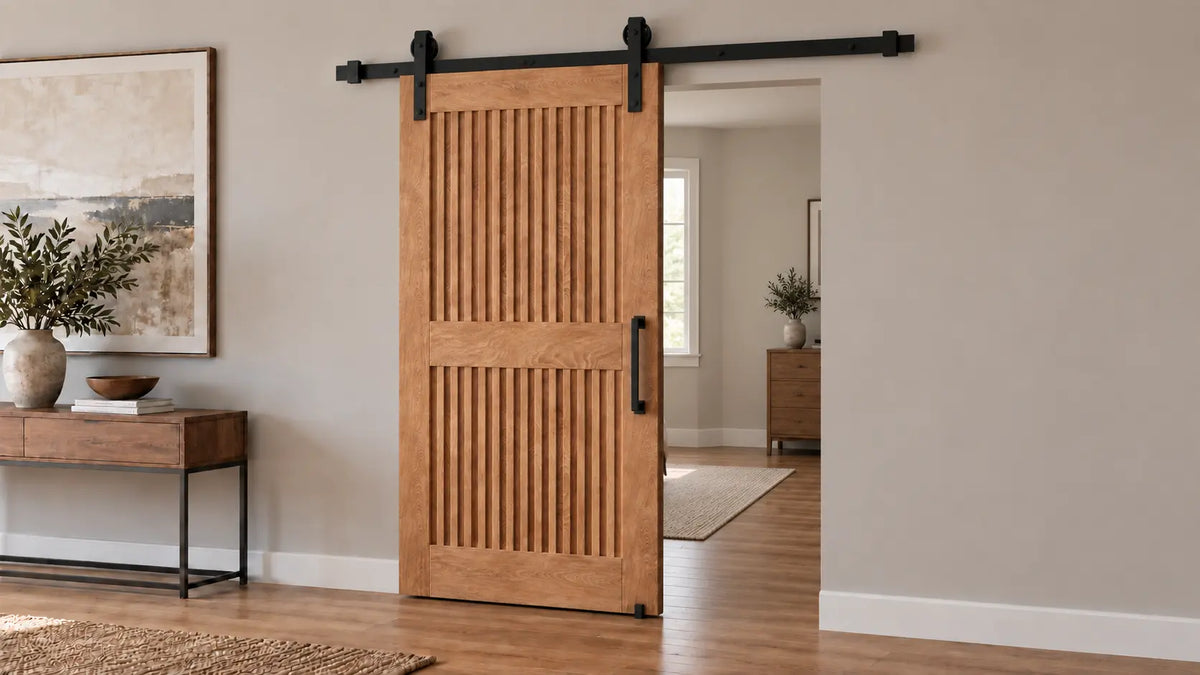
Measure the Door and Opening
 barn door hardware" width="1000" height="563">
Accurate measurements help prevent ordering a track that is too short, a door that does not cover the opening, or a system that cannot fit above the doorway.
Record the following measurements:
Finished Opening Width
Measure the opening after trim and finished surfaces are in place. The door normally needs to extend beyond the opening when closed, but the required coverage depends on the configuration and desired result.
Finished Opening Height
Measure from the finished floor to the top of the finished opening. Do not assume the rough-opening measurement is the same.
Actual Door Width and Height
Hardware and track calculations use the actual dimensions of the door, not only the opening dimensions.
Available Side-Wall Space
Measure the clear wall area in the direction each door will travel. Include switches, outlets, artwork, shelving, vents and furniture that could interfere with movement.
Vertical Clearance
Measure from the top of the door to the ceiling. Compare this measurement with the minimum clearance required by the selected roller and track configuration.
Roller designs and mounting systems can require different amounts of space, so do not assume that one clearance measurement applies to every kit.
Door Thickness and Weight
Confirm that the hardware supports the actual thickness and weight of your door. Do not rely on a general capacity listed for a different product or installation.
Track capacity also depends on correct installation into appropriate structural support.
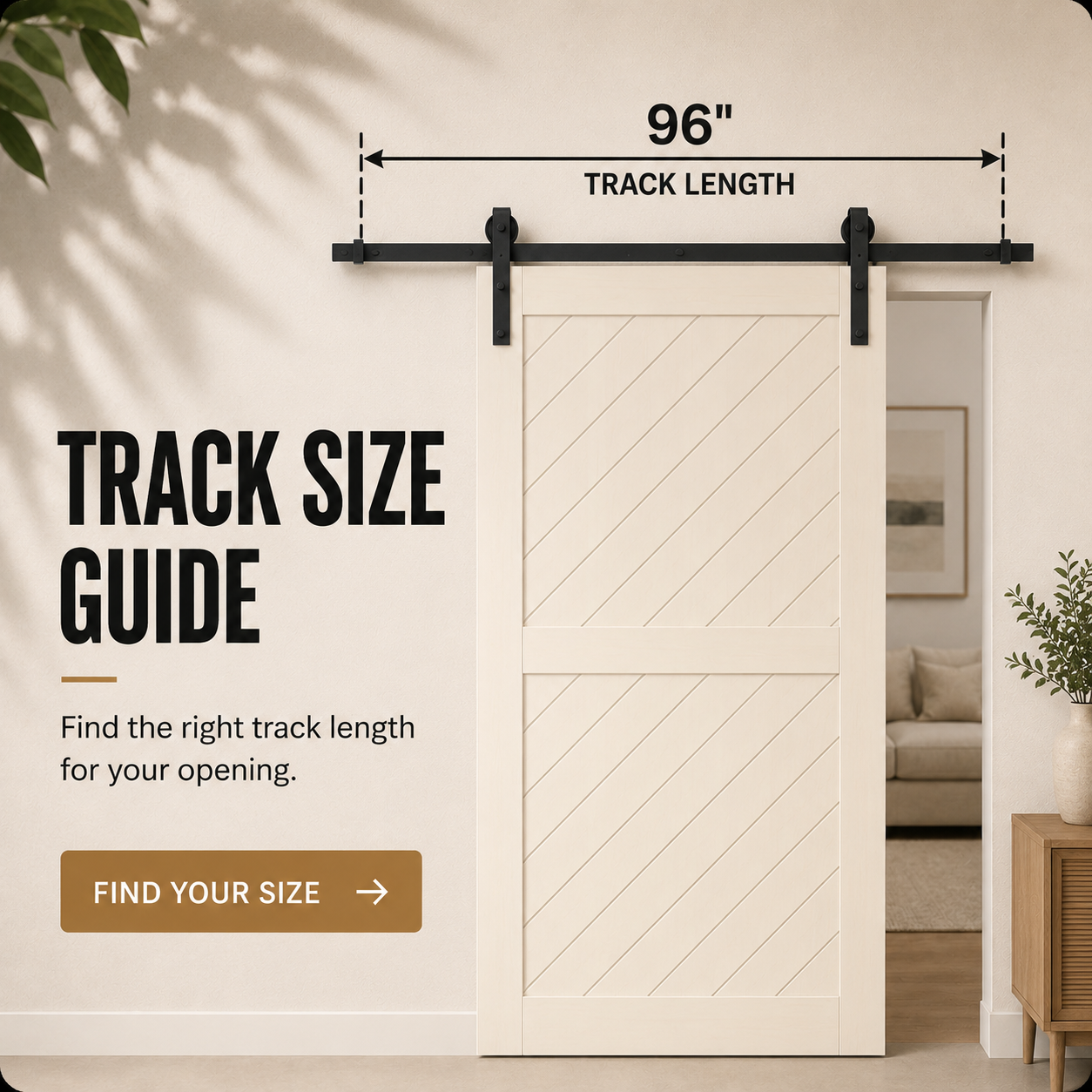
Calculate the Track Length
Track length depends on the number of doors, their widths, the type of hardware and how far the doors need to travel.
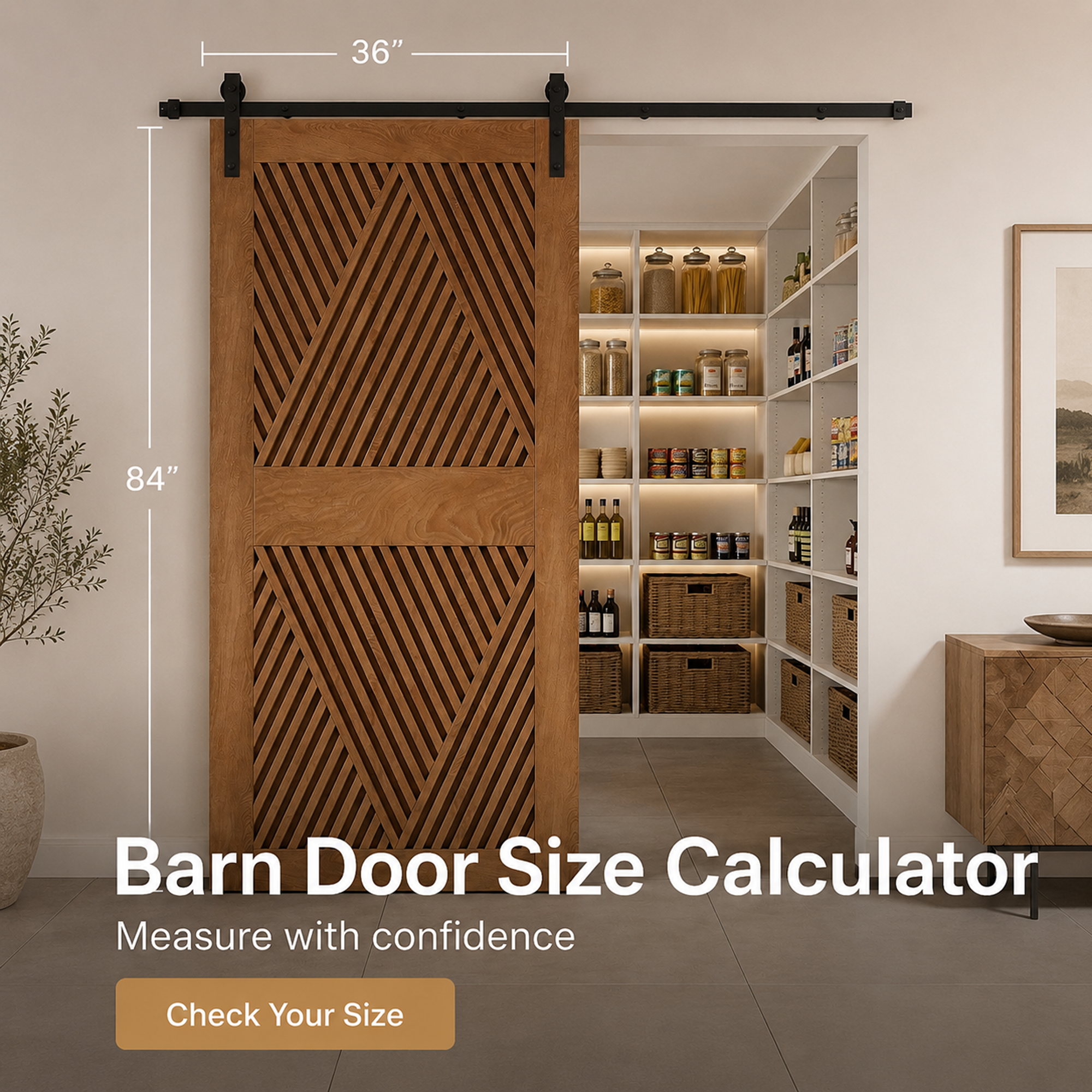
For Homacer standard non-bypass configurations, the Track Size Calculator uses:
Total door width × 2 + 2 inches
Bypass configurations use different calculations based on:
- Opening width
- Door width
- Number of doors
- Track arrangement
- Door overlap
- Available side-wall space
Bi-fold systems use product-specific sizing and should not use the standard non-bypass or bypass formulas.
Enter your measurements into the Homacer Barn Door Track Size Calculator. The result is a general recommendation; verify it against the selected product before placing your order.
Check Door, Trim and Floor Clearance
Hardware compatibility involves more than track length.
Door Trim and Baseboards
Trim can prevent the door from hanging close enough to the wall or cause the bottom of the door to contact the baseboard. Depending on the installation, a properly supported header board or compatible spacer arrangement may be needed.
Do not assume additional spacers are included with every kit. Check the selected product.
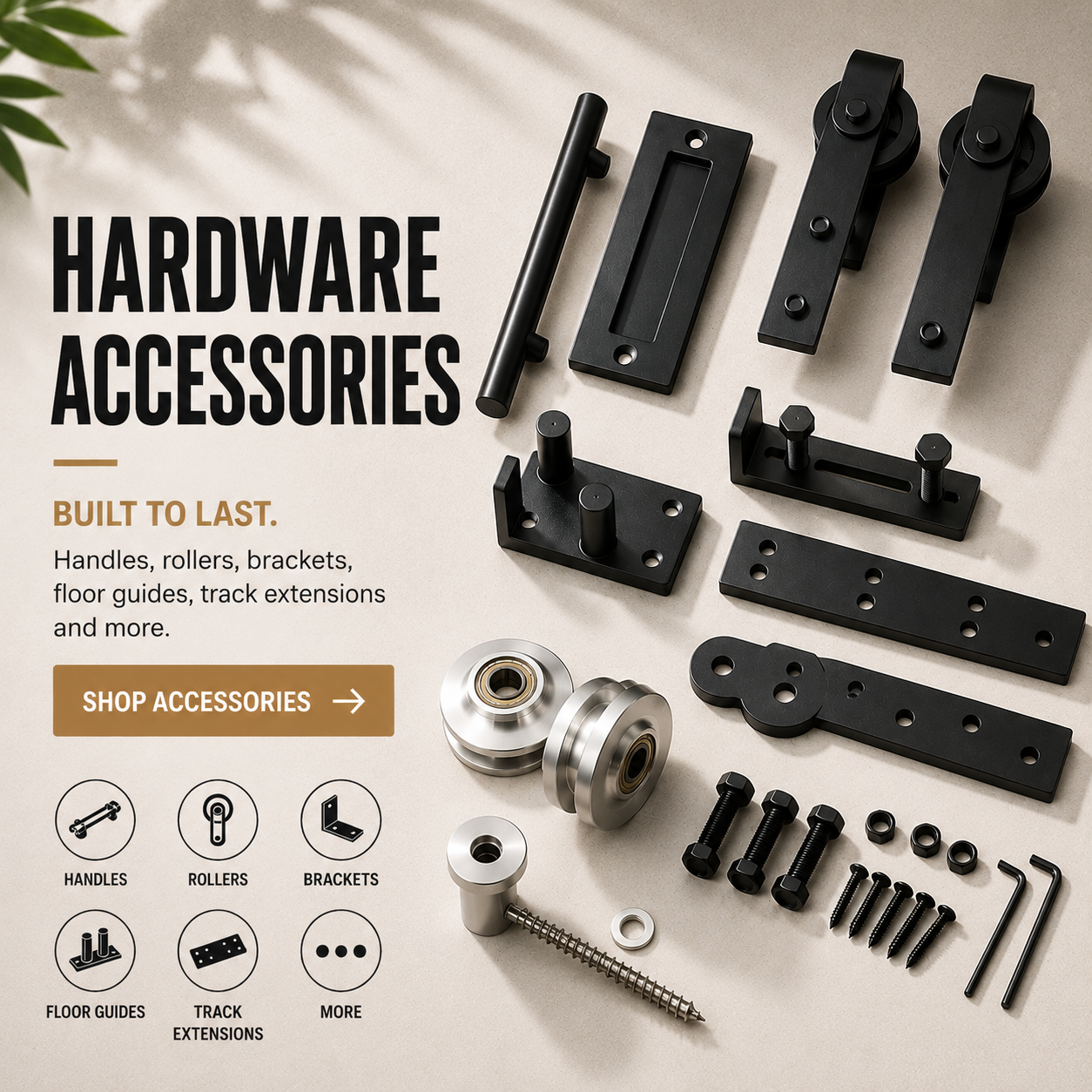
Door Handles and Door Pulls
A handle must not strike the wall, trim or another door as the panel moves. Bypass installations require particular attention because doors travel close to one another.
Check the projection and position of every handle before drilling.
Floor Guides
A floor guide helps keep a sliding door aligned as it moves. The guide style and installation method vary by product and floor condition.
Some bi-folding systems use pivots or guides specific to that configuration. Follow the instructions supplied for the selected hardware.
Uneven Floors
Measure floor clearance across the entire path of the door. A door that clears the floor in one position may rub in another if the floor is uneven.
Decide Between Hardware Only and a Combo Kit
Homacer offers different purchase types. Confirm what is included before ordering.
| Purchase option | Barn door | Sliding hardware | Door assembly status |
| Barn Door | Included | Not included | Unassembled |
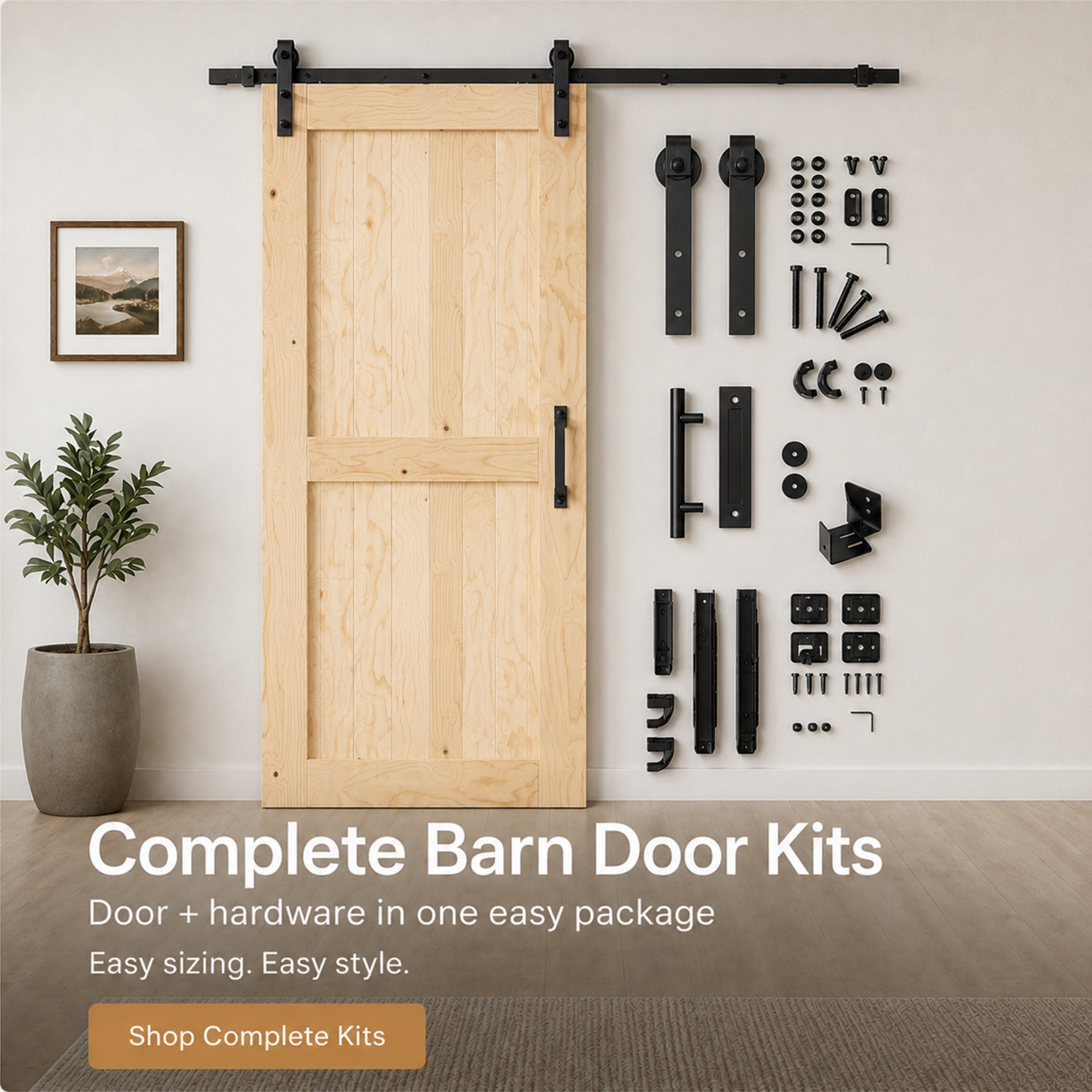
| Barn Door Combo Kit | Included | Included as specified on the product page | Unassembled |
| Hardware-Only Kit | Not included | Included as specified on the product page | Not applicable |
A hardware-only kit may be appropriate if you already have a compatible door. You will need to verify its thickness, weight, construction and drilling requirements.
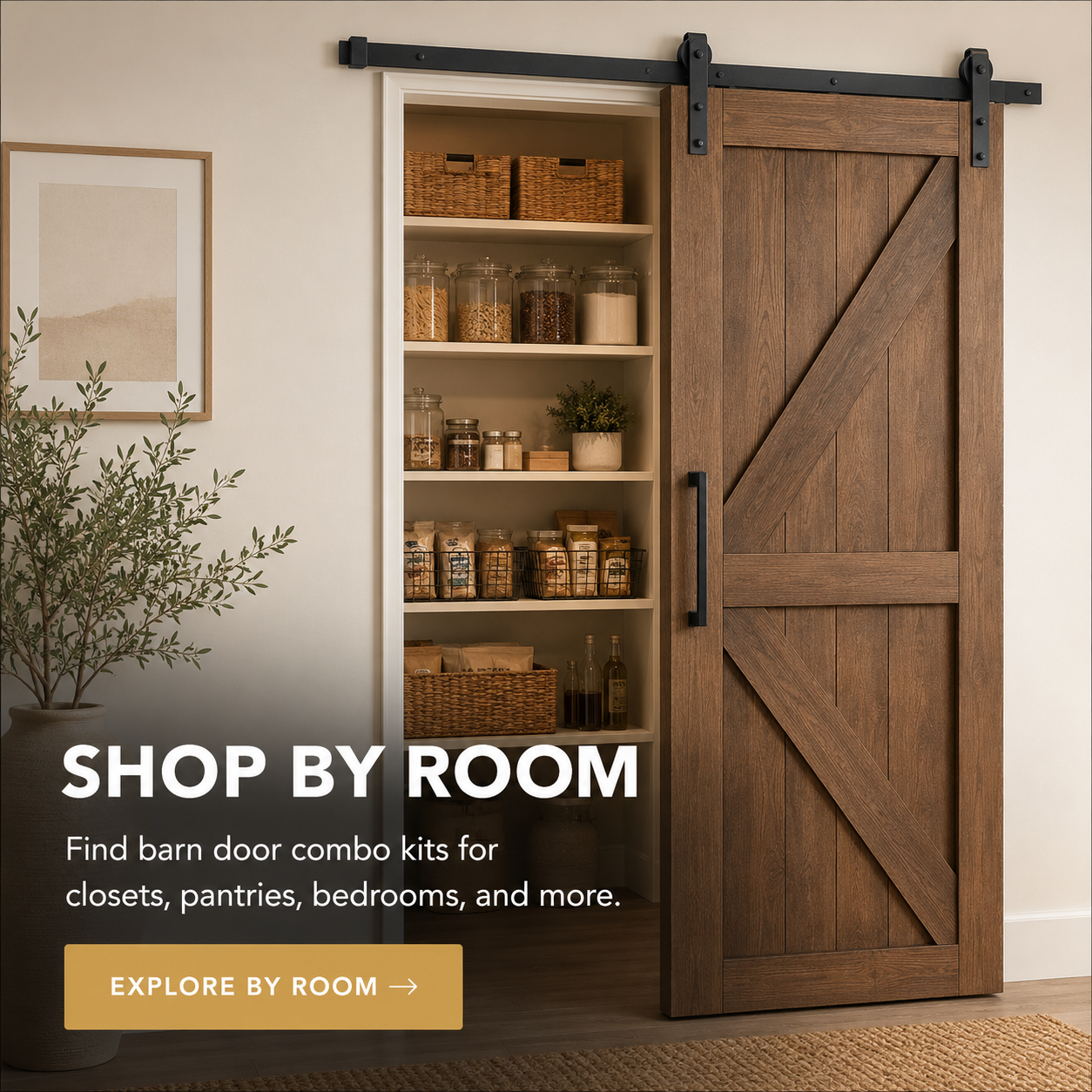
A barn door combo kit includes an unassembled barn door and the compatible hardware specified for that product. Do not assume that every accessory, handle or soft-close mechanisms is included unless it appears in the product description.
Finished Homacer doors also ship unassembled. “Finished” means that the selected color or wood finish has been applied; it does not mean that the door arrives assembled.
Consider Soft-Close Compatibility
A compatible soft-close mechanism controls the final portion of the door’s movement and helps reduce abrupt closing.
Before adding soft-close, verify:
- Compatibility with the selected track and roller system
- Door-weight requirements
- Available activation distance
- Space needed on the track
- Whether the mechanism is included or sold separately
Do not assume that one soft-close accessory works with every hardware kit.
Choose the Hardware Material, Finish and Roller Type

After confirming the track configuration, finish options, mounting method, measurements and door compatibility, compare the available hardware materials, finishes and roller options for that specific system.
Black Powder-Coated Carbon Steel Hardware
Selected Homacer black barn door hardware kits are made from carbon steel with a black powder-coated finish.
The dark finish creates a clear contrast against natural, finished and painted barn doors. Depending on the roller design, it can coordinate with modern, classic, industrial and farmhouse-inspired interiors.
Because material, coating and product specifications can vary, check the individual product page rather than assuming every black hardware kit has exactly the same construction or capacity.
Brushed Nickel Steel Hardware
Homacer also offers selected steel hardware kits with a brushed nickel finish. The lighter metallic appearance can coordinate with brushed nickel handles, stainless-colored appliances and other cool-toned fixtures.
Brushed nickel options are available in selected non-bypass, bypass, ceiling-mount and bi-fold products. Availability varies by hardware system, roller design and track length.
Other Barn Door Hardware Materials
Barn door hardware may be available in a variety of materials, including stainless steel, aluminum, brass and other metal options.
When comparing products, consider how the material affects the hardware’s appearance, durability, maintenance requirements and compatibility with the door and surrounding space. Always review the product specifications to confirm the material and finish of the hardware you choose.
Nylon and Metal Roller Wheels
Selected Homacer hardware kits use nylon roller wheels to support smooth movement and help reduce rolling noise during regular operation.
Metal wheels are available for selected systems and may be recommended for certain heavy-duty applications. They should only be used when the wheel, track, hanger and door specifications are compatible.
Do not assume that nylon or metal wheels are interchangeable across every hardware kit. Review the selected product page or contact Homacer before changing the original roller components.
Coordinate the Finish With the Door and Room
When comparing available hardware finishes, consider:
- The color and finish of the barn door
- Handles, pulls and locks
- Lighting fixtures
- Cabinet hardware
- Nearby interior door hardware
- The amount of contrast you want against the wall
Heavy-Duty Barn Door Hardware for Daily Use
Heavy duty hardware should be selected according to the actual door weight, number of doors, track configuration and rated capacity of the specific kit.
Many Homacer hardware kits support up to 220 pounds of total combined door weight. Because the exact rating can vary by product, confirm the capacity listed on the specific product page before purchasing. For multi-door systems, also check whether the published capacity applies per door or to the combined weight of all doors.
For selected Homacer double-track bypass products, metal wheels may be recommended for heavy-duty use involving doors weighing 150 pounds or more per door. This recommendation is product-specific and should not be applied to other hardware systems without checking compatibility.
Before choosing hardware for a heavy door, verify:
- Actual weight of each door
- Total combined door weight
- Door thickness and construction
- Track and roller capacity
- Number and position of mounting points
- Wall or ceiling structural support
- Floor-guide requirements
- Whether metal wheels are required or recommended
The published weight rating assumes correct installation into suitable structural support, such as a properly installed headboard or another approved mounting surface. A higher-capacity track does not make drywall alone an acceptable mounting surface.
What Supports Smooth Daily Operation?
For a bedroom, closet, pantry or laundry area that is opened frequently, smooth operation depends on the complete installation rather than one component alone.
Check that:
- The track is level and correctly aligned
- Rollers match the selected track
- The door stays within the rated weight and thickness range
- Track joints are aligned correctly
- Stoppers and anti-jump components are installed as directed
- The floor guide keeps the door properly aligned
- Handles do not contact the wall or another door
- Bypass doors maintain the required spacing
- Soft-close components are compatible with the system
- Mounting bolts remain secure during daily use
Correct sizing and installation help the rollers travel smoothly along the track. If the door becomes difficult to move, check alignment, track joints, floor-guide position and mounting hardware before replacing the rollers.
Final Checklist Before Ordering
Before adding a barn door hardware kit to your cart, confirm:
- Number of doors
- Actual door width and height
- Door thickness
- Door weight
- Finished opening width and height
- Available side-wall space
- Vertical clearance
- Wall or ceiling structural support
- Track length
- Trim and baseboard clearance
- Handle clearance
- Floor-guide compatibility
- Soft-close compatibility, if required
- Components included with the selected kit
- Heavy-duty or metal-wheel requirements confirmed, if applicable
- Hardware material and finish confirmed on the selected product page
If any measurement or compatibility requirement is unclear, contact Homacer before ordering rather than selecting hardware based only on the number of doors.
Explore All Barn Door Hardware
Frequently Asked Questions
What barn door hardware do I need for one door?
A single-door non-bypass kit is a common starting point when there is enough clear wall space for the door to slide fully beside the opening. Confirm the door width, weight, thickness, track length, structural support and vertical clearance before choosing right hardware.
What is the difference between non-bypass and bypass hardware?
Non-bypass doors move along a track without passing behind or in front of another door. Bypass hardware allows two or more doors to overlap as they move, which can reduce the amount of side-wall space needed for a wider opening.
Is single-track or double-track bypass hardware better?
Neither system is best for every installation. Single-track bypass hardware uses a more compact track arrangement, while double-track hardware gives the doors separate parallel paths. The right choice depends on vertical clearance, door thickness, overlap, handles and room layout.
For a detailed comparison, read the Bypass Barn Door Hardware Buying Guide.
Can barn door hardware be mounted directly to drywall?
No. Drywall alone is not appropriate structural support for a barn door track. Wall-mounted hardware must be secured to suitable studs, blocking or another properly supported mounting structure. Ceiling-mounted systems require suitable ceiling joists or reinforced blocking.
How long should a barn door track be?
Track length depends on the door width, number of doors, hardware type, overlap and available travel space. Use the Homacer Track Size Calculator for an estimate, then verify the result against the selected hardware kit.
When should I choose ceiling-mount hardware?
Ceiling-mount hardware may be considered when the wall above the opening cannot accommodate a conventional track. The ceiling must have suitable structural support in the correct location, and the installation must meet the selected kit’s clearance and door requirements.
Is bi-folding hardware the same as bypass hardware?
No. Bi-fold door panels are connected and fold as they open. Bypass doors remain flat and slide past one another on overlapping paths. The two systems have different measurements, movement patterns and installation components.
Does a barn door hardware kit include the door?
A hardware-only kit does not include a barn door. A Homacer barn door combo kit includes an unassembled barn door and the compatible hardware specified for the selected product. Always review the individual product description for the exact included components.
Does every hardware kit include soft-close?
No. Soft-close availability and compatibility vary by product. Check whether it is included, optional or sold separately before ordering.
What should I look for in heavy-duty barn door hardware?
Start with the actual door's weight and thickness of every door, then compare them with the rated capacity of the specific hardware kit. Also check the track configuration, roller type, mounting structure and whether the published capacity applies per door or to the combined door weight. Do not choose heavy-duty hardware based on the track’s appearance alone.
What helps barn door hardware operate smoothly with daily use?
Smooth daily operation depends on correct track alignment, compatible rollers, proper door weight, secure structural mounting, an correctly positioned floor guide and adequate clearance around the door. Compatible soft-close hardware can control the final portion of the door’s movement, but it does not correct an improperly aligned track or incompatible door.
Choose Hardware Based on the Installation
The right barn door hardware is the system that matches the door, opening, structure and available movement space.
Begin with the door configuration, confirm the mounting structure, measure the opening and surrounding area, and calculate the required track length. Once those requirements are established, you can compare compatible roller styles, finishes and optional accessories.
Browse Homacer Barn Door Hardware Kits, or use the Barn Door Track Size Calculator before making your final selection.