
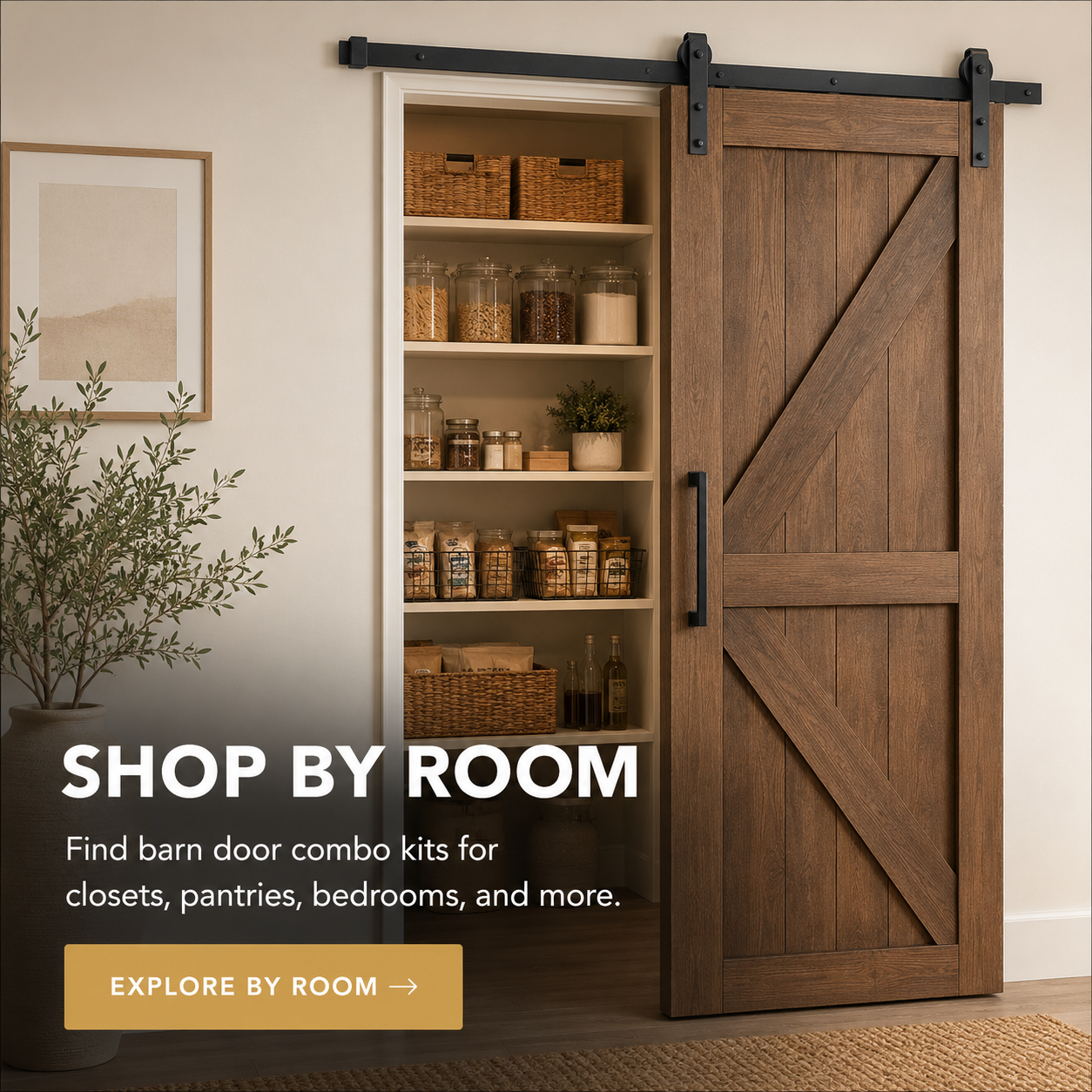
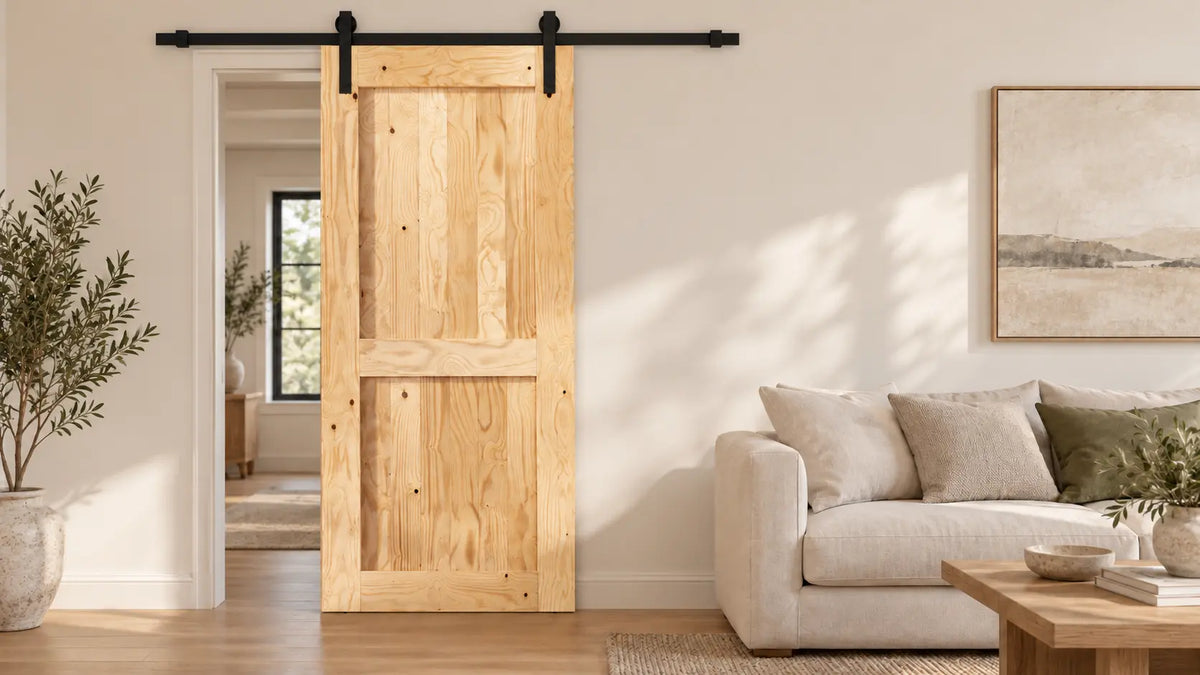
A barn door is a large, visible feature in your home. Its material affects more than its appearance on installation day—it also influences your finish choices and what you can do when the surface needs refreshing.
When comparing MDF vs solid wood barn doors, solid wood stands out for its natural construction, authentic grain, and finishing flexibility. MDF can provide a smooth, uniform appearance, but a PVC-covered MDF door has limitations worth understanding before you buy.
What Is the Difference Between MDF and Solid Wood Barn Doors?
MDF Barn Doors
MDF, or medium-density fiberboard, is made by pressing wood fibers together with resin. It has a uniform surface that works well with paint and decorative coverings.
A listing that says “MDF with PVC finish” describes two materials: MDF beneath a PVC surface layer. That covering supplies the finished look, but the material underneath remains MDF.
Painted MDF, PVC-covered MDF, and MDF with real wood veneer are different constructions. Their options for staining, repairs, and refinishing are not interchangeable.
Solid Wood Barn Doors
Solid wood barn doors use natural lumber components, retaining the wood’s grain and structure. They can be assembled from multiple pieces of wood; “solid wood” does not mean a door must be cut from one board.
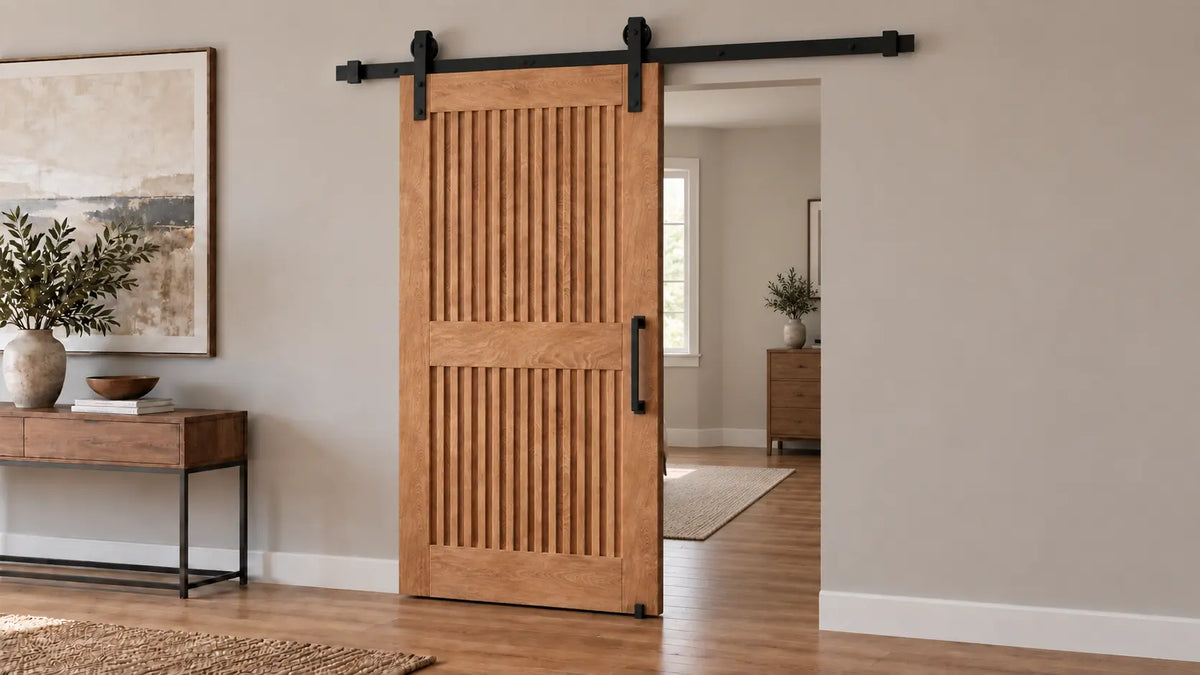
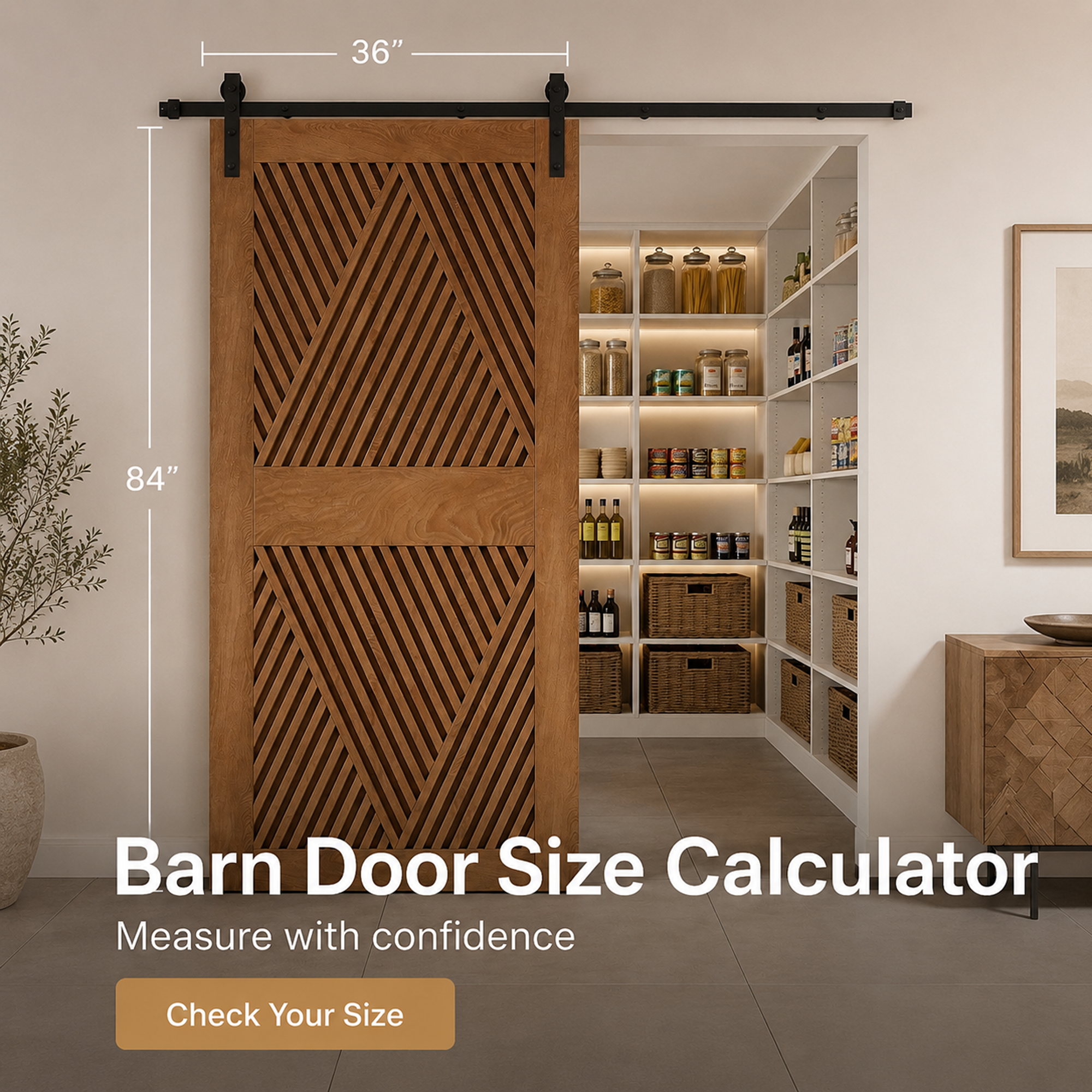
Homacer’s solid wood barn doors feature natural pine construction across classic 5-in-1 styles, modern geometric patterns, frosted glass designs, and chalkboard options. Finished and unfinished choices let you select the look for your interior, from visible wood grain to a painted finish or wood paired with glass.
MDF vs Solid Wood Barn Doors at a Glance
The biggest differences become clearer when you look beyond the initial finish. What is the door made from? Can you stain it to reveal natural grain? What options do you have if the surface needs refreshing later?

| What Matters | MDF Barn Doors | Solid Wood Barn Doors |
|---|---|---|
| Material and adhesives | Wood fibers depend on resin to form the board. The resin formulation matters when evaluating emissions. | Made from natural wood rather than wood fibers bonded with resin. |
| Natural wood character | MDF has no natural grain. A wood-look surface requires a decorative finish or real wood veneer. | Real grain and knots give each door individual character, visible through suitable stains and clear finishes. |
| Staining and color choices | PVC-covered MDF cannot be stained like bare wood. Bare MDF will not produce the grain of stained lumber. | Unfinished wood can be stained to show its grain or painted to coordinate with your room. |
| Updating the surface | A PVC covering limits conventional sanding and staining. Repairs and new coatings must suit the covering. | The wood surface offers options for touch-ups, sanding, and refinishing, depending on the finish, design, and damage. |
| Moisture exposure | Standard MDF can swell when wetted. Excessive swelling can permanently affect its appearance and strength. | Natural wood can swell, shrink, or warp with moisture changes. Proper finishing and a suitable indoor environment matter. |
The advantage of solid wood: you get natural lumber, genuine wood character, and a surface that offers flexibility beyond its original finish.
Why Choose a Solid Wood Barn Door?
Natural Wood Instead of Resin-Bonded Fibers
For buyers concerned about glue and material composition, this is a meaningful distinction: MDF relies on resin to bind its fibers, while solid wood retains its natural structure.
Some MDF resins can release formaldehyde. Emissions vary by product, so check the manufacturer’s information and applicable compliance labeling. The EPA’s consumer guide to composite wood products explains these requirements.
Choosing solid wood avoids an MDF substrate in the wood components. It does not automatically mean an entire finished door is glue-free or emission-free; joint adhesives and coatings still count. For a buyer who prefers natural lumber over manufactured fiberboard, however, the construction difference is clear.
Authentic Grain That Belongs to the Wood

A stained wood barn door brings natural variation into a room. Grain patterns, knots, and changes in tone belong to the wood itself, giving each door its own appearance.
That character is especially valuable when the barn door is a focal point in a bedroom, living area, or home office. Choose a stain or clear finish when you want the grain to remain visible.
Homacer’s classic pine barn doors combine this natural character with flexible 5-in-1 styling.
Freedom to Choose a Painted or Stained Finish

An unfinished solid wood barn door gives you a choice of direction: highlight the grain with stain, preserve a natural look with a suitable clear finish, or paint the wood to coordinate with your trim.
A PVC-covered MDF door starts with a manufactured surface. You cannot simply sand it back to reveal natural lumber underneath and stain that wood.
If choosing your own finish is part of the project, explore unfinished barn doors. Our guide to painting or staining an unfinished barn door covers the preparation and finishing process.
More Possibilities for Refreshing the Surface
Consider what happens when your décor changes or the door develops surface wear.
With solid wood, some scratches and finish damage can be addressed through touch-ups, sanding, or refinishing. The appropriate method depends on the door’s design, existing coating, and depth of damage.
A PVC-covered MDF surface requires a different approach. Sanding through the covering exposes MDF, not stainable lumber, and matching a damaged factory covering can be difficult.
The ability to work with the wood itself is a practical reason to choose solid wood when future finish changes matter to you.
What Should You Know About Moisture?
Water exposure and normal seasonal humidity changes are different issues.
Standard MDF can swell if water reaches it, and excessive swelling can cause permanent damage. Moisture-resistant grades offer improved performance, but a PVC surface alone does not establish that the complete door is waterproof.
Solid wood also responds to moisture. Finish and care for it as directed, keep it away from direct water exposure, and use it in the environment specified by the manufacturer. Homacer’s interior barn doors should be treated as interior products.
Neither material should be selected for a wet location simply because its visible surface looks sealed.
Is MDF Ever the Right Choice?
MDF can be a practical option when a smooth, consistent painted or factory-covered finish is your main priority. It also generally has less seasonal dimensional movement than solid wood.
If natural grain, stain choices, and future surface refinishing matter more to you, solid wood is the better fit for those priorities.
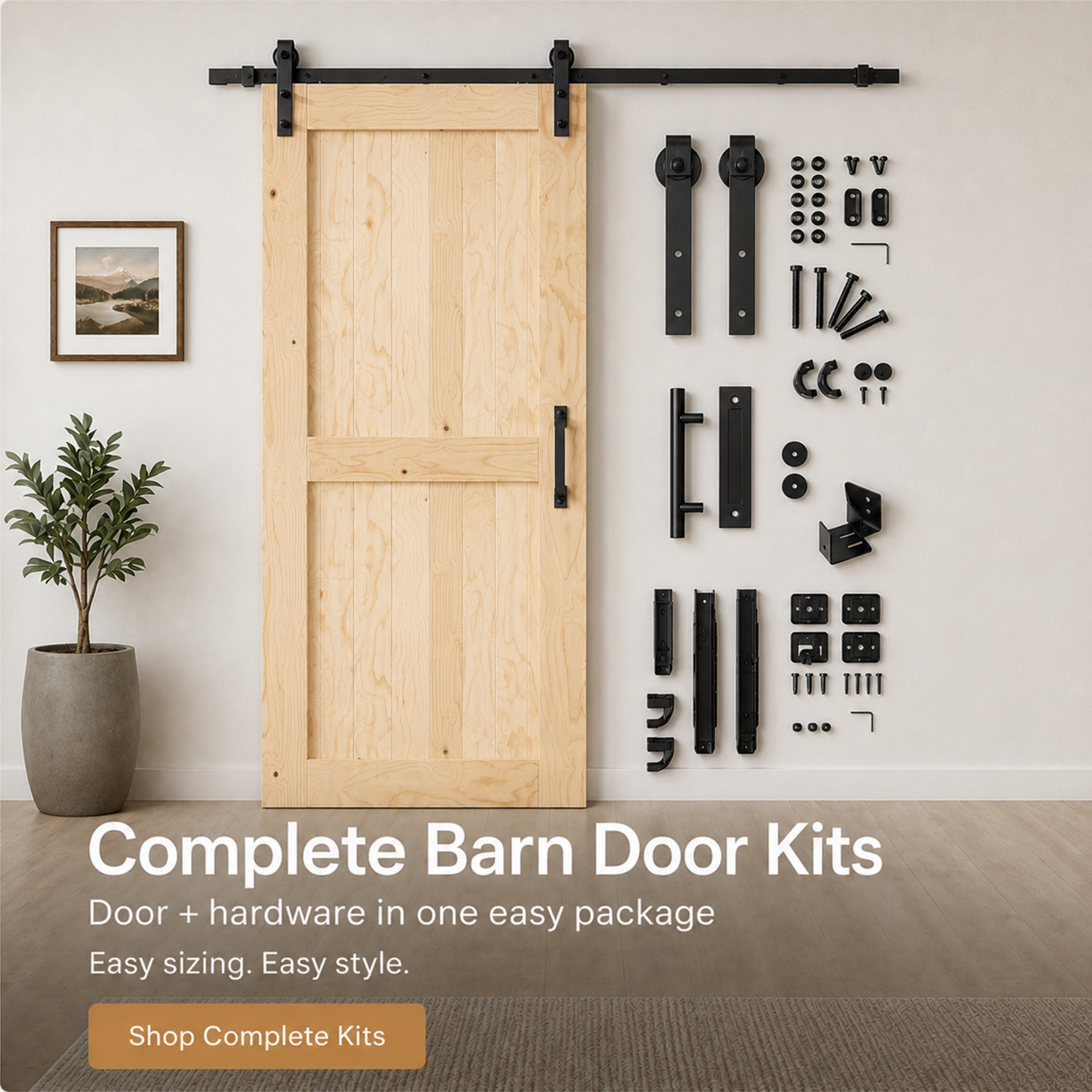
Compare equivalent purchases: door size, construction, finish, assembly requirements, and included hardware all affect what you receive. A door-only product and a door with a soft-close hardware kit are different packages.
Choose a Solid Wood Barn Door That Fits Your Home
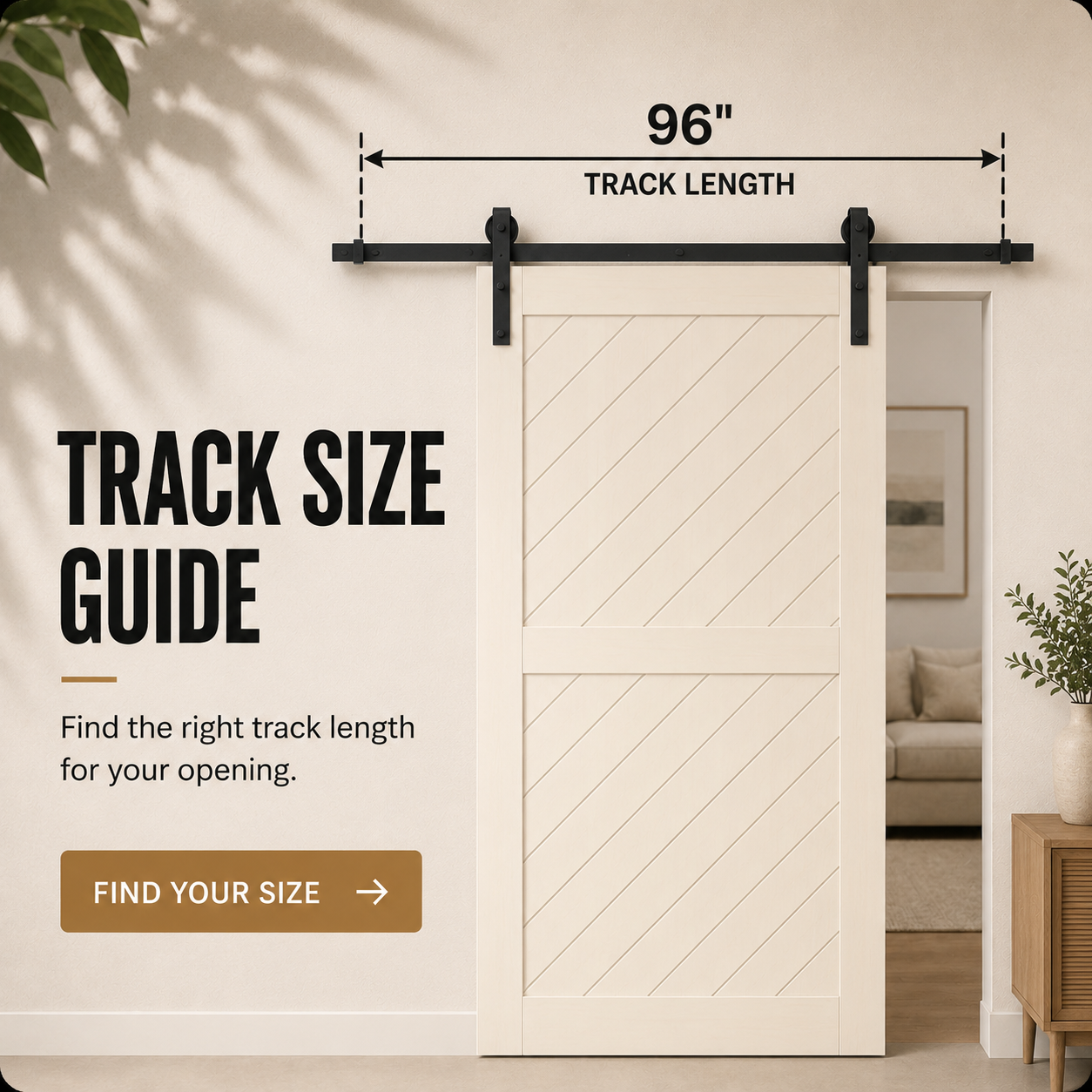
Start with the look you want: classic detailing, a modern pattern, frosted glass, or a chalkboard design. Then choose the size and finish that suit your opening and room.
Browse Homacer’s interior sliding barn doors to explore the range. If you are buying a door separately, match your barn door hardware to its actual weight, thickness, and installation requirements.
For homeowners who want the character of real wood and flexibility in how it is finished, a solid wood barn door is a worthwhile choice.
Frequently Asked Questions
Are solid wood barn doors better than MDF barn doors?
Solid wood barn doors are a better choice if you value natural wood grain, staining options, and the ability to refresh the wood surface over time. MDF can work well for a smooth, uniform painted finish, but PVC-covered MDF does not offer the same natural grain or conventional refinishing options.
What is the best material for barn doors?
The best material depends on the look and flexibility you want. Solid wood is an excellent choice for homeowners who want authentic wood character and the option to paint or stain their barn door. For a consistent factory-covered appearance, MDF may also suit the project. Consider the door’s construction, finish, and intended environment before choosing.
Is MDF good for barn doors?
MDF can be suitable for interior barn doors designed for that use, particularly when a smooth, uniform finish is the priority. Its limitations include the absence of natural grain, restricted refinishing options on PVC-covered surfaces, and the potential for standard MDF to swell when exposed to water.
What are the disadvantages of MDF barn doors?
MDF has no natural wood grain, and PVC-covered versions cannot be sanded and stained like bare solid wood. Damage to a decorative covering can also be difficult to blend into the original finish. Standard MDF may suffer permanent damage from excessive moisture exposure. Because MDF uses resin to bond its fibers, buyers concerned about emissions should check the product’s compliance information.
Do MDF barn doors have a chemical smell?
Some may have a noticeable odor from materials used in the door, but this varies by product. Smell alone cannot establish formaldehyde levels or compliance. Ask for product-specific emissions information if this is a concern.
Is a PVC-finished MDF barn door solid wood?
No. PVC is the surface covering, and MDF is the manufactured wood-fiber material beneath it. A wood-look finish does not change that construction.