A sliding barn door can provide privacy, but locking one is different from locking a conventional hinged door. Because the panel hangs in front of the opening instead of closing inside a framed jamb, many standard door locks will not work.
If the lock must be operated from both sides, the choices become more specific. The lock has to suit the door thickness, mounting surface and distance between the door and wall without interfering with the sliding path.
This guide explains the main barn door lock options, what “locking from both sides” actually means and what to check before drilling into the door.
Can You Lock a Sliding Barn Door From Both Sides?
Yes, but only with a lock designed for two-sided operation and compatible with the installation.
Many common barn door latches—such as hook-and-eye latches, teardrop latches and surface bolts—are operated from one side only. They may provide privacy for a bathroom or bedroom, but a person on the other side cannot normally operate them.
A true double-sided barn door lock provides controls on both faces of the door. Depending on the product, this may mean:
- A thumb turn on one side and an emergency release on the other
- A thumb turn or lever on both sides
- A keyed exterior control with an interior thumb turn
- A locking mechanism specifically made for an overlapping sliding door
Do not assume a lock works from both sides simply because it is advertised for barn doors. Check how it is operated, how it engages the stationary surface and whether an emergency release is provided.
How to Add Privacy to a Sliding Barn Door
Adding a lock is only one part of improving privacy. The door should also extend far enough beyond the opening, remain aligned in its floor guide and sit close enough to the wall to limit visible gaps.
For a bathroom or bedroom, a privacy latch is normally intended to prevent someone from casually sliding the door open. A double-sided model may also provide an exterior emergency release so the room can be accessed when assistance is needed.
Privacy and security are not the same. Most interior sliding barn doors hang in front of the opening rather than closing inside a sealed frame. For high-security needs, use a door and locking system designed for forced-entry resistance rather than relying on a decorative barn door latch.
What Does “From Both Sides” Mean?
The phrase can describe several different functions. Identifying the one you need will make it easier to choose the right lock.
Operated From Either Side
A lock with controls on both faces allows the door to be locked or unlocked from either side. This may be useful for a connecting bathroom, shared office or room with more than one access route.
Make sure the mechanism does not allow someone to unintentionally lock another person inside the room.
Locked From Inside With an Exterior Emergency Release
This is often the more practical arrangement for a bathroom or bedroom. The occupant locks the door from inside, while the exterior side has an emergency release rather than a normal locking control.
The release allows the door to be opened from outside if assistance is needed. Check the exact product instructions and any applicable local requirements before installation.
Keyed From Outside
A keyed sliding-door lock may be considered for an office, storage room or other interior space where access needs to be restricted.
Some products use a key outside and a thumb turn inside. Others require a key on both sides. For an occupied room, consider whether the door can always be opened easily from inside and whether the arrangement is appropriate for the intended use.
Common Types of Sliding Barn Door Locks
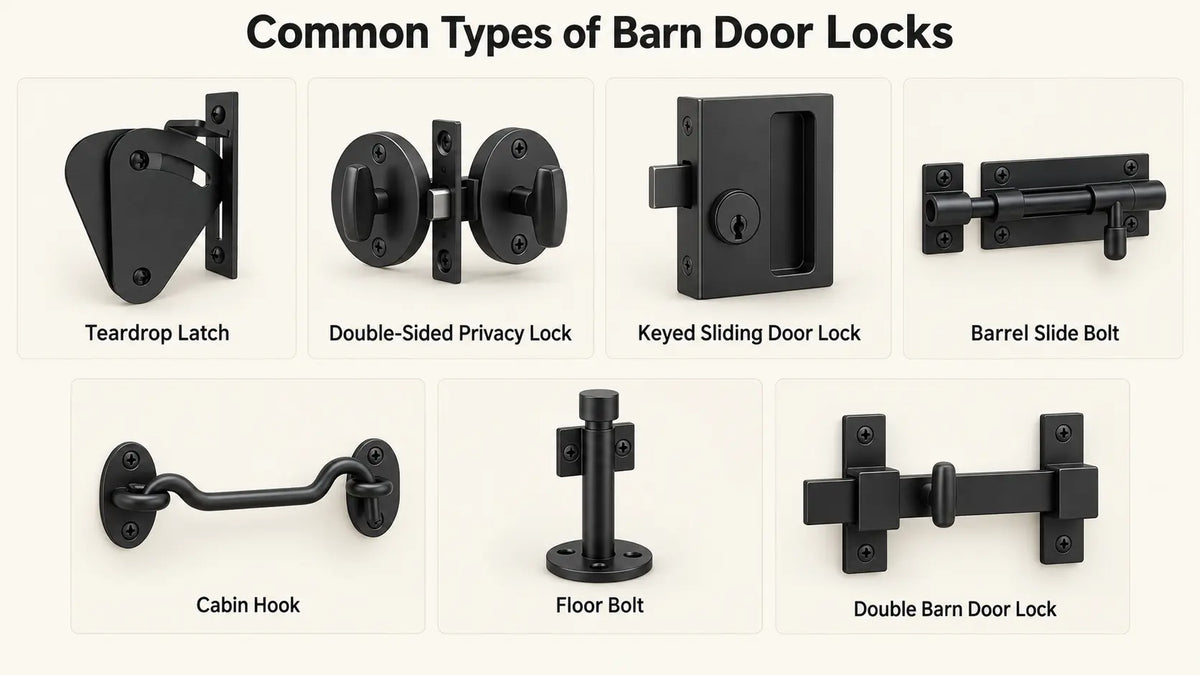
Different locks solve different problems. The following comparison can help narrow the options.
| Lock type | Normally works from both sides? | Best suited for | Main consideration |
| Double-sided privacy lock | Yes | Bathrooms, bedrooms and shared interior rooms | Check door thickness, receiver position and emergency-release design |
| Keyed sliding-door lock | Depending on model | Offices and interior storage rooms | Confirm interior exit operation and installation requirements |
| Teardrop latch | No | Interior privacy from one side | Requires a suitable wall, trim or jamb surface beside the closed door |
| Hook-and-eye latch | No | Closets, pantries and basic privacy | Simple, but generally provides limited resistance |
| Sliding bolt or barrel slide bolt | No | Bedrooms, bathrooms and utility rooms | Receiver must align with the door when closed |
| Floor bolt | Usually no | Special layouts without a useful side receiver | Requires a suitable floor and careful placement |
| Meeting-door lock | Depending on model | Double barn doors | Must be designed for two moving panels or one secured panel |
| Cabin hook | No | Closets, pantries and basic one-sided privacy | Simple surface-mounted design with limited resistance |
Homacer Black Teardrop Lock for One-Sided Privacy
Homacer currently offers the Black Teardrop Lock for customers who need a simple, surface-mounted privacy latch.
The lock is made from solid steel and uses a control arm built into the fan-shaped blade. The required installation components are included, but the door and adjacent mounting surface must provide enough space for the two parts to align when the door is closed.
This teardrop lock is operated from the side where the control arm is installed. It is suitable for one-sided privacy but should not be described as a double-sided barn door lock. If the room requires normal operation from both sides or an exterior emergency release, select a lock specifically designed for that function.
Before ordering, review the product dimensions and confirm that the lock will not contact the wall, trim or handle when the door slides open.
Always follow the specifications of the exact lock. Products that look similar may require different door thicknesses, backsets, clearances or receiver locations.
Other Lock Types to Compare
The following lock types are included to help explain the available options. Homacer does not currently sell these locks, and their compatibility with Homacer doors or hardware should be verified with the lock manufacturer before installation.
Barrel Slide Bolt
A barrel slide bolt uses a sliding metal bolt that enters a surface-mounted receiver. It is generally operated from one side, making it suitable for basic bedroom or bathroom privacy when two-sided operation is not required.
The door and receiver must remain aligned when closed. A sliding bolt should not be installed where it will strike the wall or trim as the door opens.
Cabin Hook
A cabin hook uses a hinged hook that engages a wall- or jamb-mounted eye. It is inexpensive and easy to understand, but it normally works from one side only.
Cabin hooks are better suited to closets, pantries or basic privacy than to rooms requiring two-sided access or meaningful security. The mounting surface must also be strong enough to withstand repeated use.
Best Barn Door Lock for a Bathroom
The right bathroom lock depends on whether privacy is needed from one side or whether the door must also be accessible from outside.
For one-sided privacy, Homacer’s Black Teardrop Lock may be considered when the door and adjacent mounting surface provide suitable alignment.
If the bathroom requires an exterior emergency release or normal operation from both sides, choose a compatible double-sided privacy lock designed for that function. Homacer does not currently offer a double-sided model.
Before selecting a bathroom lock, check:
- Which face of the door will carry the lock
- How far the door sits from the wall
- Whether the latch can engage a secure stationary surface
- Whether exterior emergency access is required
- Whether the lock clears the wall and trim as the door opens
- Whether the door provides enough overlap to limit sight lines
A lock prevents the panel from sliding, but it does not eliminate the gaps around a barn door.
Best Barn Door Lock for a Bedroom
A bedroom barn door may use a one-sided privacy latch or a two-sided lock, depending on how the room is used.
A one-sided latch may be enough when the occupant only needs to secure the door from inside. A two-sided privacy lock is more useful when the door should be operable from the hallway and bedroom sides.
For a bedroom installation, also consider noise and light. Barn doors do not seal against a stop on all four sides like many hinged doors. Increasing the panel overlap may reduce visible gaps, but a barn door should not be expected to provide the same acoustic separation as a properly fitted hinged door.
Keyed Locks for Offices and Interior Storage
A keyed barn door lock may be useful for a home office, supply closet or other interior room where access needs to be controlled.
The lock must be designed for the way the barn door meets the opening. Some mechanisms require a solid jamb or strike surface. Others mount through the door and engage a wall-mounted component.
Check the following before purchasing:
- Required door thickness
- Minimum clearance behind the door
- Key access on the intended side
- Interior unlocking method
- Lock-body depth
- Required drilling or mortising
- Compatibility with the handle and floor guide
- Whether the lock is intended for privacy or actual access control
Do not install a projecting lock body where it will strike the wall, trim or hardware as the door opens.
Can Double Barn Doors Be Locked?
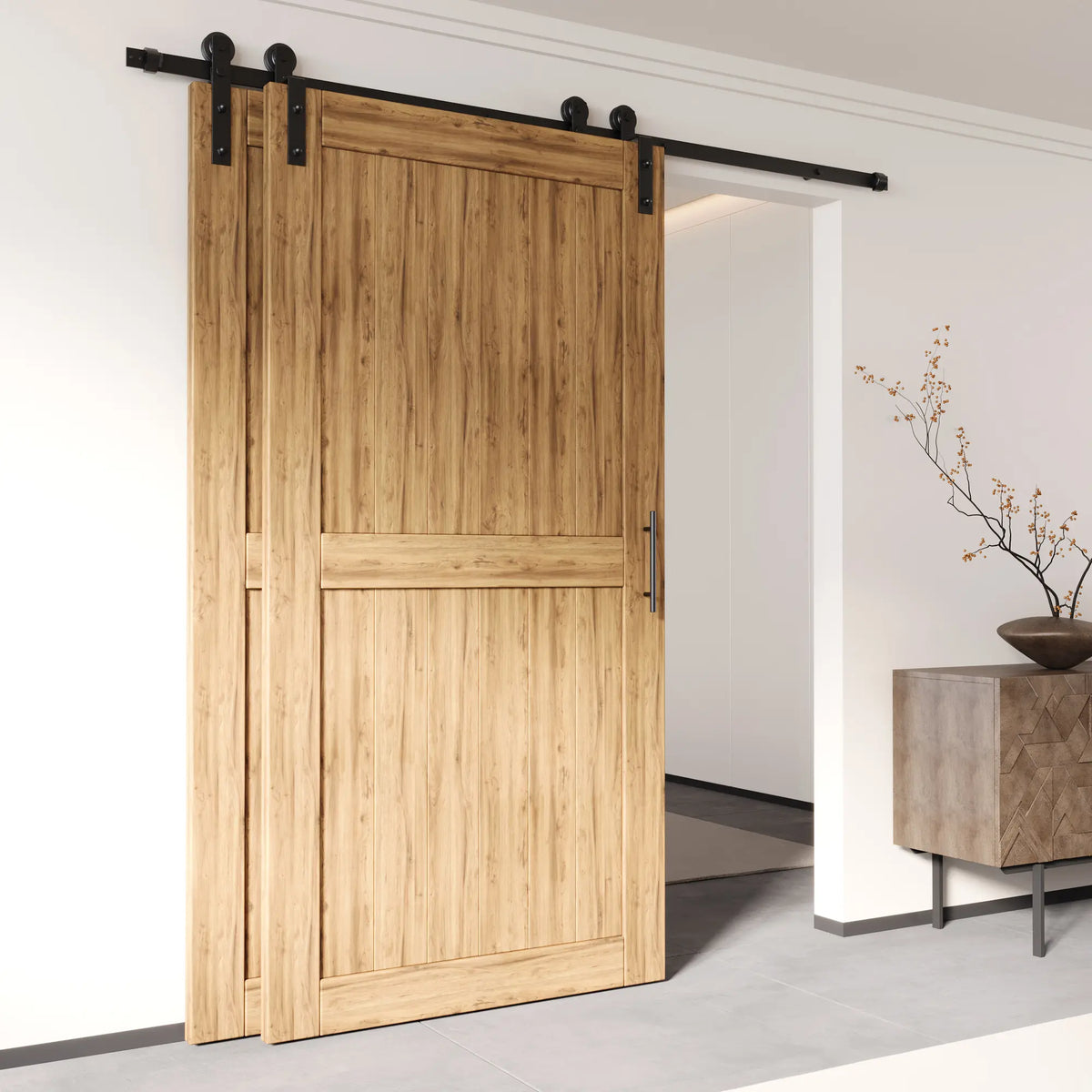
A single door normally locks to a stationary wall, jamb or trim-mounted receiver. Double barn doors are different because the two panels meet near the center, and both may remain movable.
Double barn doors can still be locked, but the mechanism must be designed for two meeting panels. One option is to secure one door in position and latch the active door to it. Another is to use a meeting-door lock that allows both panels to operate as intended.
One method is to secure one panel in position and latch the active panel to it. Another is to use a meeting-door lock designed specifically for two sliding panels. The correct approach depends on whether both doors need to remain independently operable.
Before installing a lock on double doors, check:
- Whether the two door edges meet evenly
- Whether one panel can be safely held stationary
- How the floor guides control the bottom edges
- Whether the lock will carry force between the panels
- Whether either door can move far enough to disengage the lock
- Whether the handles interfere when the doors meet
Do not use one moving panel as a receiver for the other unless the locking system is designed for that arrangement.
Can Bypass Barn Doors Be Locked?
Bypass doors require additional planning because the panels move on separate front and rear paths.
A standard wall-mounted latch may secure only one panel while leaving the other free to move. A projecting lock or handle on the rear panel may also collide with the front door as the panels overlap.
For a bypass system, confirm:
- Which panel needs to be secured
- Whether both panels must lock together
- Front-to-back clearance between the doors
- Handle and lock projection
- Floor-guide placement
- Whether the lock is designed for overlapping sliding panels
Do not modify bypass hangers, tracks or guides to accommodate an unrelated lock. The door system should remain properly aligned throughout its complete travel.
Can You Install a Lock on a Glass Barn Door?
Only use a lock identified as compatible with the exact glass door construction.
Tempered glass cannot be drilled or altered after tempering. A lock designed for a wood door should not be attached to a glass panel unless the door and lock manufacturers specifically permit the installation.
Some framed glass barn doors may allow hardware to attach to the surrounding wood or metal frame. Even then, check the frame width, fastener requirements and location of the glass before drilling.
If the lock requires a hole, notch or mortise that is not already present, consult the door manufacturer or an experienced installer first.
How to Choose a Sliding Barn Door Lock
The right sliding barn door lock depends on how the door closes, which side needs to operate the lock and where the receiver can be securely mounted. Measure the following details before selecting a product.
Door Thickness
Measure the actual door panel, including any frame or applied surface material where the lock will be installed. Through-door locks normally support a defined thickness range.
Gap Between the Door and Wall
Measure the distance from the back face of the closed door to the wall, casing or baseboard. This determines whether the lock body and receiver can fit without rubbing.
Available Receiver Surface
Identify the stationary surface the lock will engage. This could be a jamb, wall, trim board, header-supported structure or floor.
A receiver should not be fastened only to unsupported drywall where repeated operation could loosen it.
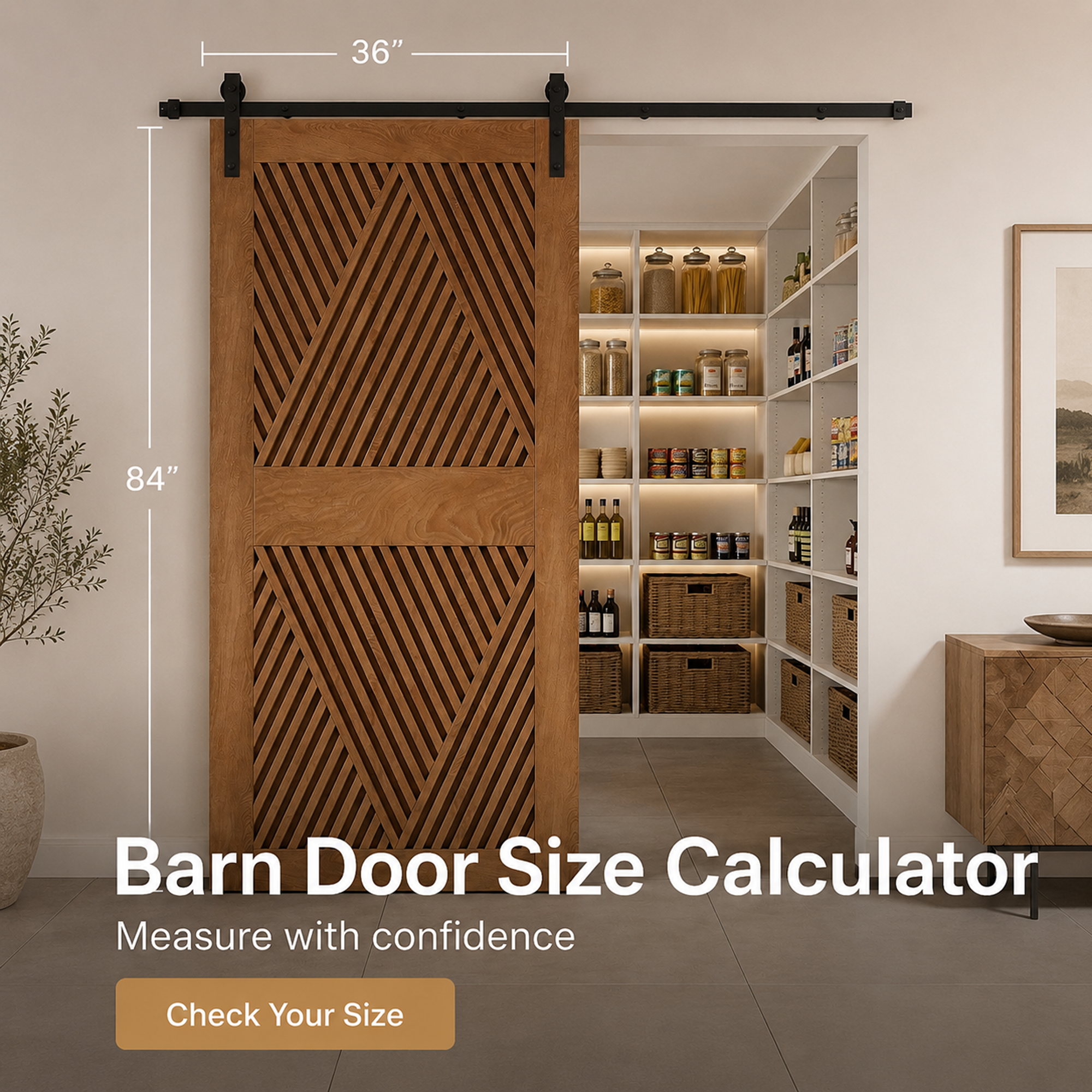
Door Overlap
Measure how far the door extends beyond both sides of the finished opening when closed. Limited overlap can leave sight lines even when the door is locked.
Use Homacer’s Barn Door Size Calculator as a planning tool, then verify the result against the selected door and hardware instructions.
Handle and Hardware Clearance
Check the handle, hanger, floor guide, stop and anti-jump components. The new lock must not interfere with any moving part or prevent the door from opening fully.
Tools You May Need
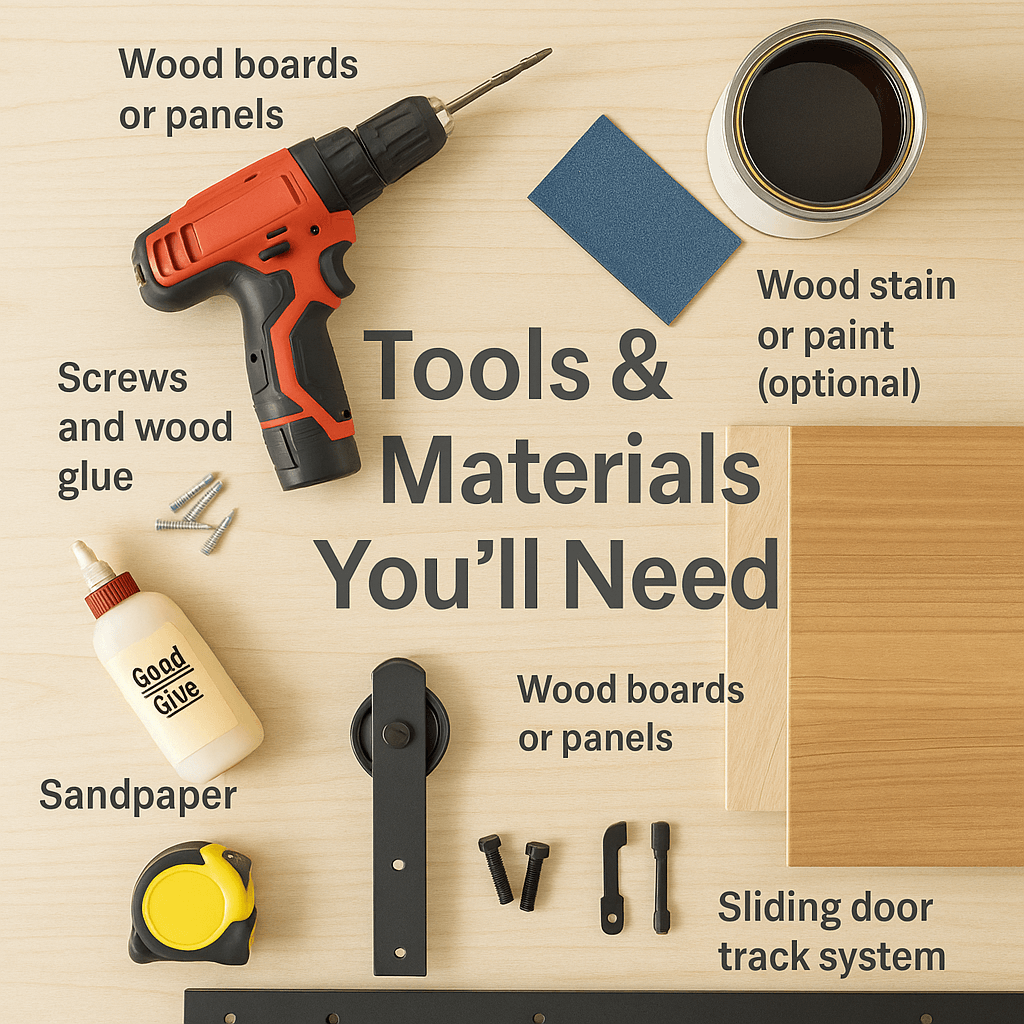
Many surface-mounted locks can be installed with basic tools, although the exact requirements depend on the lock and door material. Common tools may include:
- Tape measure
- Pencil
- Level
- Drill and suitable drill bits
- Screwdriver
- Manufacturer-supplied template
- Safety glasses
Check both faces of the door before drilling. Do not drill tempered glass or an unknown glass panel unless the door manufacturer specifically permits it.
How to Install a Barn Door Lock
Installation details vary, so use the instructions supplied with the exact lock. The general planning sequence is:
- Close the barn door and confirm that it hangs level.
- Make sure the floor guide keeps the lower edge aligned.
- Identify the stationary surface that will receive the latch or bolt.
- Check that the lock clears the wall throughout the door’s complete travel.
- Mark the lock and receiver positions while the door is fully closed.
- Verify both sides of the door before drilling.
- Predrill only where permitted for the door material.
- Install the lock and receiver using appropriate fasteners.
- Open and close the door several times to check for rubbing or misalignment.
- Test all controls, including any exterior emergency release.
Do not rely on the lock to correct a door that is out of level or swinging away from the wall. Resolve track, hanger and floor-guide alignment before adding the lock.
Review Homacer’s installation instruction guide for the selected sliding hardware before changing the door setup.
Common Barn Door Lock Mistakes
Assuming Every Barn Door Latch Works From Both Sides
Many products are one-sided surface latches. Read the operating description rather than relying only on the product name or photographs.
Confusing a Double-Sided Handle With a Lock
A handle provides a way to move the door. It does not secure the panel unless it is part of a locking mechanism.
Choosing the Lock Before Checking the Closed Position
The lock must engage a fixed receiver when the door is closed. Decorative trim, wide casing or a large wall gap can prevent proper alignment.
Mounting a Receiver to Drywall Alone
Repeated pulling can loosen hardware attached only to drywall. Use suitable framing, blocking or another secure structural mounting surface as required.
Forgetting the Sliding Path
A surface-mounted component may fit while the door is closed but strike the wall or trim when the door opens.
Drilling Into Glass Without Approval
Do not drill tempered glass or an unknown glass panel. Use only hardware and mounting locations approved for the door.
Expecting the Lock to Eliminate Door Gaps
A lock holds the door in position. It does not change the basic surface-mounted construction of a barn door or make the opening fully sealed.
Plan the Door and Lock as One System
The best time to plan a barn door lock is before choosing the final door and hardware. Door thickness, overlap, wall clearance, handles and guides all affect which locks can be installed.
For simple one-sided privacy, review Homacer’s Black Teardrop Lock and confirm that the latch will align with a secure mounting surface when the door is closed.
If two-sided operation, keyed access or an exterior emergency release is required, select a separate lock designed for that specific function. Confirm its compatibility with the door material and installation layout before drilling.
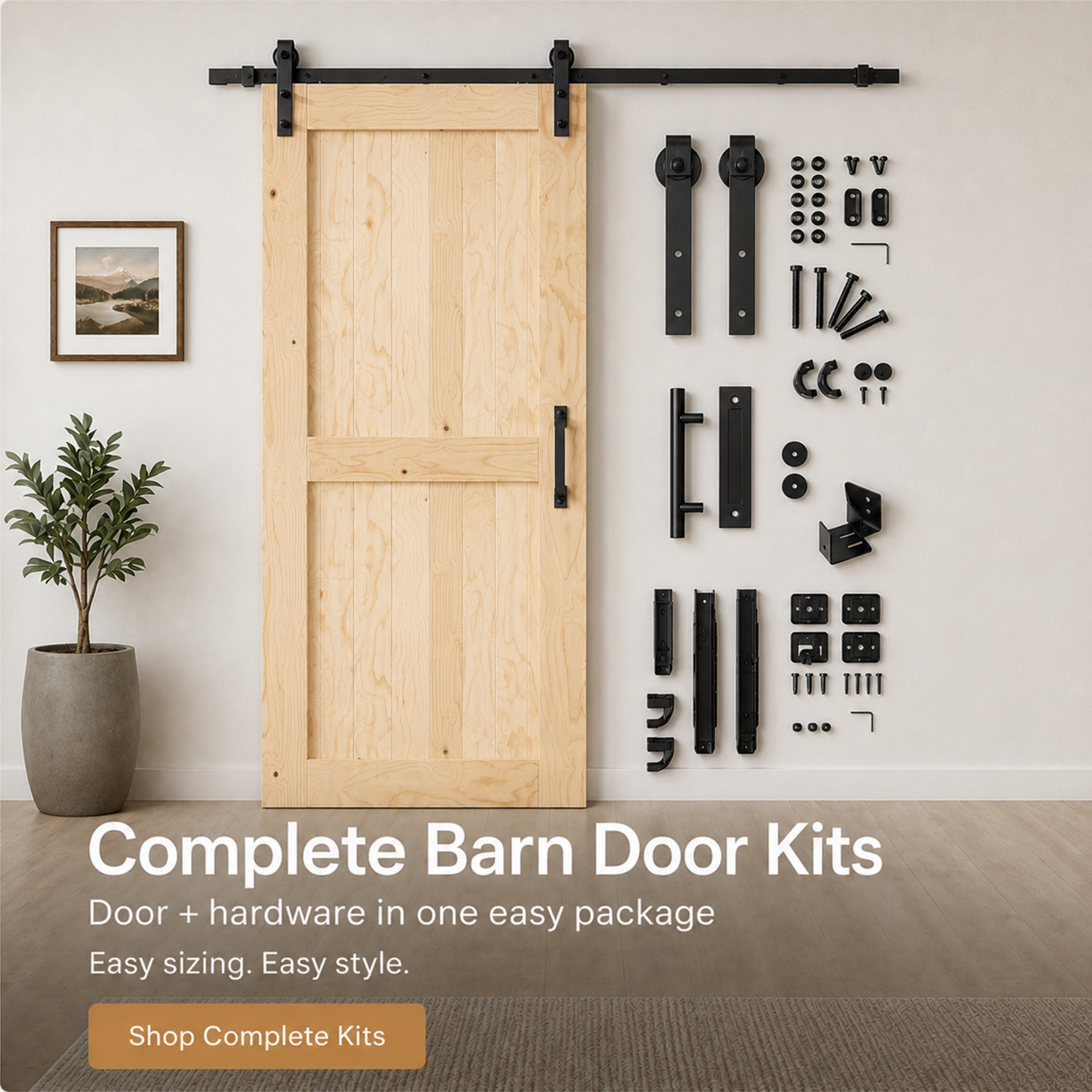
Browse Homacer’s interior barn doors, barn door hardware kits and complete barn door combo kits when planning the full installation. Locks and accessories are not necessarily included with a door or hardware kit; check the exact product listing before ordering.
Frequently Asked Questions
Can you lock a barn door from both sides?
Yes. You need a double-sided barn door lock with controls on both faces of the door. Depending on the intended use, this may be a privacy lock with an exterior emergency release or a keyed lock with an interior thumb turn. Check the supported door thickness and receiver location before purchasing.
How do you lock a double barn door?
Double barn doors can be secured with a meeting-door lock designed for two sliding panels. Another option is to hold one door in a fixed position and latch the active door to it. The floor guides must keep both panels aligned, and the lock should not rely on an unsecured moving door as its receiver.
What is a good double-sided latch for a sliding barn door?
For a bathroom or bedroom, a double-sided privacy latch with an interior control and exterior emergency release is usually the most practical choice. For an office or interior storage room, a compatible keyed sliding-door lock may provide better access control. The best option depends on the door thickness, wall gap and available mounting surface.
Can you add a lock to a sliding barn door?
Yes, a compatible lock can usually be added to an existing sliding barn door. Before installation, measure the door thickness, the gap behind the door and the available surface for the receiver. Also make sure the lock will not strike the wall, trim or handle as the door opens.
What is the best lock for a bathroom barn door?
A privacy lock that operates from inside and includes an accessible exterior emergency release is generally the most suitable option. A bathroom lock should provide privacy without making emergency access unnecessarily difficult.
Can a teardrop latch be opened from both sides?
Most teardrop latches are operated from one side only. If the door must be operated from both sides, choose a lock specifically identified as double-sided rather than assuming a standard teardrop latch will provide that function.
Can a barn door be locked from the outside?
Yes, with a compatible keyed lock or double-sided locking mechanism. For bathrooms and occupied bedrooms, an exterior emergency release may be more appropriate than a lock requiring a key.
Are barn door locks secure?
Most interior barn door locks provide privacy or basic access control. They should not be treated as replacements for exterior security doors, framed entry locks or deadbolts.
Can you install a lock on a glass barn door?
Only when the lock is approved for the exact glass door construction. Tempered glass cannot be drilled after tempering, so the lock may need to attach to an existing hole or to the surrounding wood or metal frame.
Will a lock remove the gaps around a barn door?
No. A lock prevents the panel from sliding, but it does not seal the edges of the opening. Door width, overlap and distance from the wall determine how much visual and acoustic privacy the closed door provides.